Welcome to The Junction
After a pause of a few months, The Infravision Foundation (TIF) is returning with a renewed focus on urban mobility in India.
The Junction is our new quarterly publication on the questions shaping metropolitan mobility—and what they mean for the people who use these systems every day. We will look beyond individual projects and modes to explore how the different parts of a city’s mobility system work together.
Between editions, our fortnightly Field Notes will stay closer to the ground—looking at the everyday commute and the experiences and observations of people navigating our cities. You will receive the first Field Notes tomorrow at 11 A.M.
Together, we hope they can contribute to a more grounded, commuter-first conversation about metropolitan mobility in India.
We would like you to be part of that conversation. What are we missing? What should we pay closer attention to? We welcome your observations and suggestions.
Opening Note
India's Next Mobility Challenge Is No Longer Just Building Assets
State of Play: India has crossed 1,000 km of operational metro rail, with networks now extending well beyond the largest metros. As this infrastructure expands, another challenge is becoming harder to ignore: making complete journeys work. Last-mile costs, difficult interchanges, gaps in connectivity and fragmented institutional responsibilities can determine whether the system works for the commuter. This issue looks at where some of these frictions are surfacing—and what we can learn from how other cities have responded.
Across India, cities are entering a new phase of mobility expansion.
The operational metro rail network has grown from 248 km across five cities in 2014 to more than 1,000 km across over 20 cities today. New metro corridors, regional rail systems, airports, expressways and multimodal projects are continuing to reshape urban mobility.
But as this infrastructure expands, another layer of complexity is becoming more visible.
A commuter’s journey rarely begins or ends at a metro station or bus stop. It may involve walking, an auto or feeder service, a bus, suburban rail or metro, and increasingly digital services that help connect different parts of the trip.
The quality of that journey therefore depends not only on the individual modes, but on what happens between them: station access, the last mile, interchange, information, fares and the ability of different institutions and services to work together.
Individually, these may appear to be relatively small frictions. Together, they raise a larger question: how do we move from building individual transport systems towards making the entire journey work for the commuter?
The answer will increasingly matter for public transport adoption, commuter trust, urban productivity and the quality of metropolitan life.
The Junction will explore questions such as these through practitioner conversations, institutional perspectives, emerging trends and comparative learning from India and elsewhere.
Our starting point is the commuter—and the systems and institutions that must come together to make the journey work.
From the Field
Alongside The Junction, we are introducing Field Notes: shorter observations from mobility systems on the ground.
Every two weeks, each note will examine a specific part of the everyday journey—from commuter adaptations and station-level realities to last-mile economics, walkability, digital integration and the experience of changing between modes.
Together, Field Notes and The Junction will connect what commuters encounter in their daily journeys with the wider operational and institutional questions shaping metropolitan mobility.
Signals From the Ground
Mumbai: Around residential clusters on JVLR near the new Mumbai Metro 3 Aqua Line stations, commuters have reportedly begun organising informal auto-pooling through WhatsApp groups to manage last-mile connectivity during peak hours.
Parking near stations can cost around Rs 120 for a few hours - in some cases more than double the metro fare itself.
Small frictions like these may shape commuter behaviour as much as the infrastructure network itself.
Bengaluru: A commuter travelling on the Purple Line from Whitefield to MG Road covers roughly 24 km in under 50 minutes for Rs 50. But evening cab fares for a 2-3 km ride regularly hit Rs 180-260, surging higher on rainy days. Feeder buses are thin and poorly timed to tech-sector exits. Commuters end up timing office departures around surge windows, building WhatsApp carpool groups, or simply driving - because parking is more predictable than pricing algorithms.
Hydrabad: The city runs two urban rail systems: MMTS suburban rail, priced below Rs 15, and Metro, with approximately 4 lakh daily passengers. Yet there is no shared ticketing, coordinated timetable or wayfinding that presents them as one network. The August 2023 Mahalakshmi scheme also shifted fare-sensitive commuters back to buses on parallel corridors. Three networks. No common framework.
Continue with Field Notes: These signals raise a larger question: what happens when different modes exist, but the commuter still has to make the connections work? In Field Notes 01, we look at Kochi—India’s most ambitious multimodal experiment—and what its interchanges tell us about designing the journey as a whole.
What the Signals Are Telling Us
Metropolitan Mobility Is Becoming a Coordination Challenge.
State of Play: Much of what shapes the commuter experience may increasingly sit not within any single system, but in the spaces between them—and those spaces are, for now, largely unmanaged.
Indian cities are entering a new phase of metropolitan mobility expansion.
Metro systems are growing rapidly. Regional corridors are being planned at larger scale. Airports, suburban rail, expressways and multimodal transport systems are beginning to reshape how commuters move across metropolitan regions.
But as networks expand, another challenge is becoming more visible: coordination.
Historically, most urban mobility systems in India evolved mode by mode and agency by agency.
Metro systems, suburban rail, buses, roads, airports and feeder networks were often planned, financed and operated through separate institutional structures with different mandates and operational priorities.
But commuters experience cities very differently.
For them, mobility is not organised around agencies or projects. It is experienced as one interconnected journey.
And this is where many of the next-generation systems challenges in urban mobility are beginning to emerge.
Questions around:
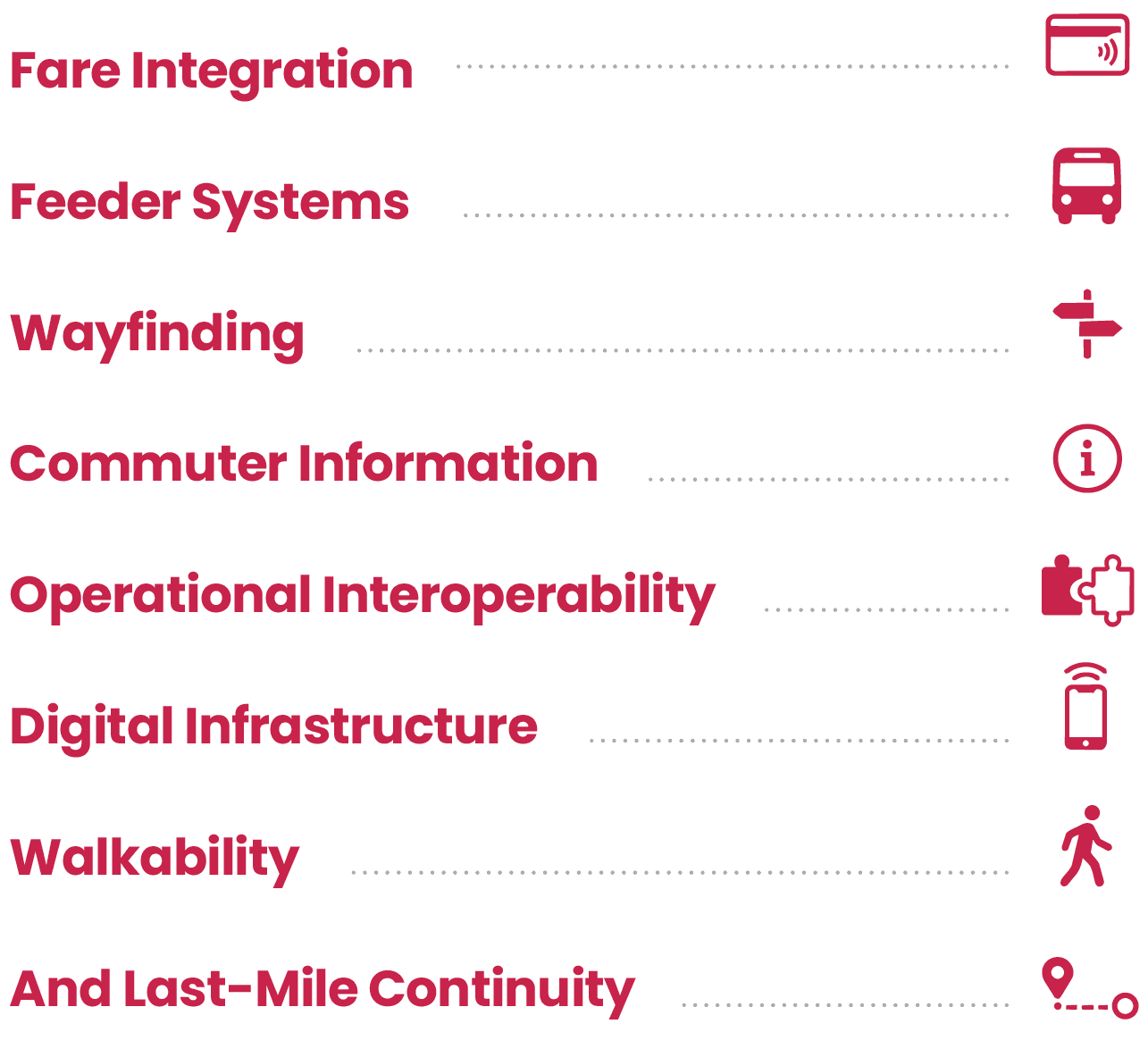
are becoming increasingly important as metropolitan systems scale.
The challenge is no longer simply whether cities can build transport infrastructure.
Increasingly, the question is whether multiple systems can begin functioning coherently at metropolitan scale.
This may become especially relevant over the coming decade as Indian metropolitan regions continue expanding and commuter movement becomes more distributed, multimodal and interconnected.
Around the world, different cities have evolved different institutional responses to these coordination challenges.
Some have focused on integrated transport authorities. Others have prioritised fare integration, commuter information systems, multimodal ticketing or operational coordination across agencies.
India’s own metropolitan systems may now be entering a phase where similar questions become increasingly difficult to avoid.
The implications extend beyond transport infrastructure itself.
They touch:
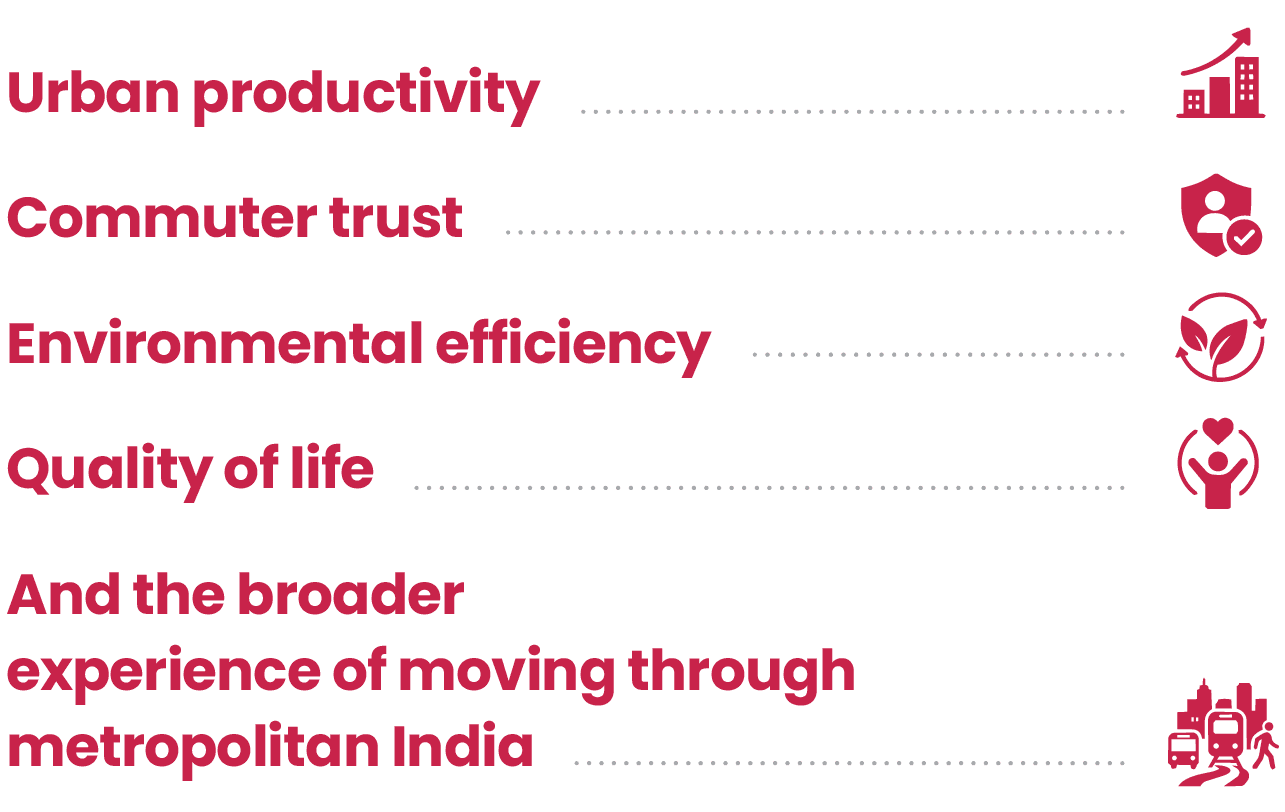
The challenge, increasingly, is not only about building mobility assets.
It is about making mobility systems work together.
Looking Ahead: Infra Katha
Building a Broader Practitioner Conversation
Not models. Questions. Infra Katha conversations are not structured around importing solutions or benchmarking against global best practices. They are structured around sitting with hard questions alongside practitioners who are navigating them in real systems.
What's Next

A closed-door, by-invitation conversation on September 26, 2026, with Shashi Verma, Chief Technology Officer at Transport for London (TfL).
What Infra Katha Is
As Indian metropolitan systems become larger and more interconnected, the need for deeper practitioner conversations around mobility integration and commuter experience is likely to grow.
Many of the emerging challenges are no longer confined to engineering or infrastructure creation alone.
They increasingly involve:
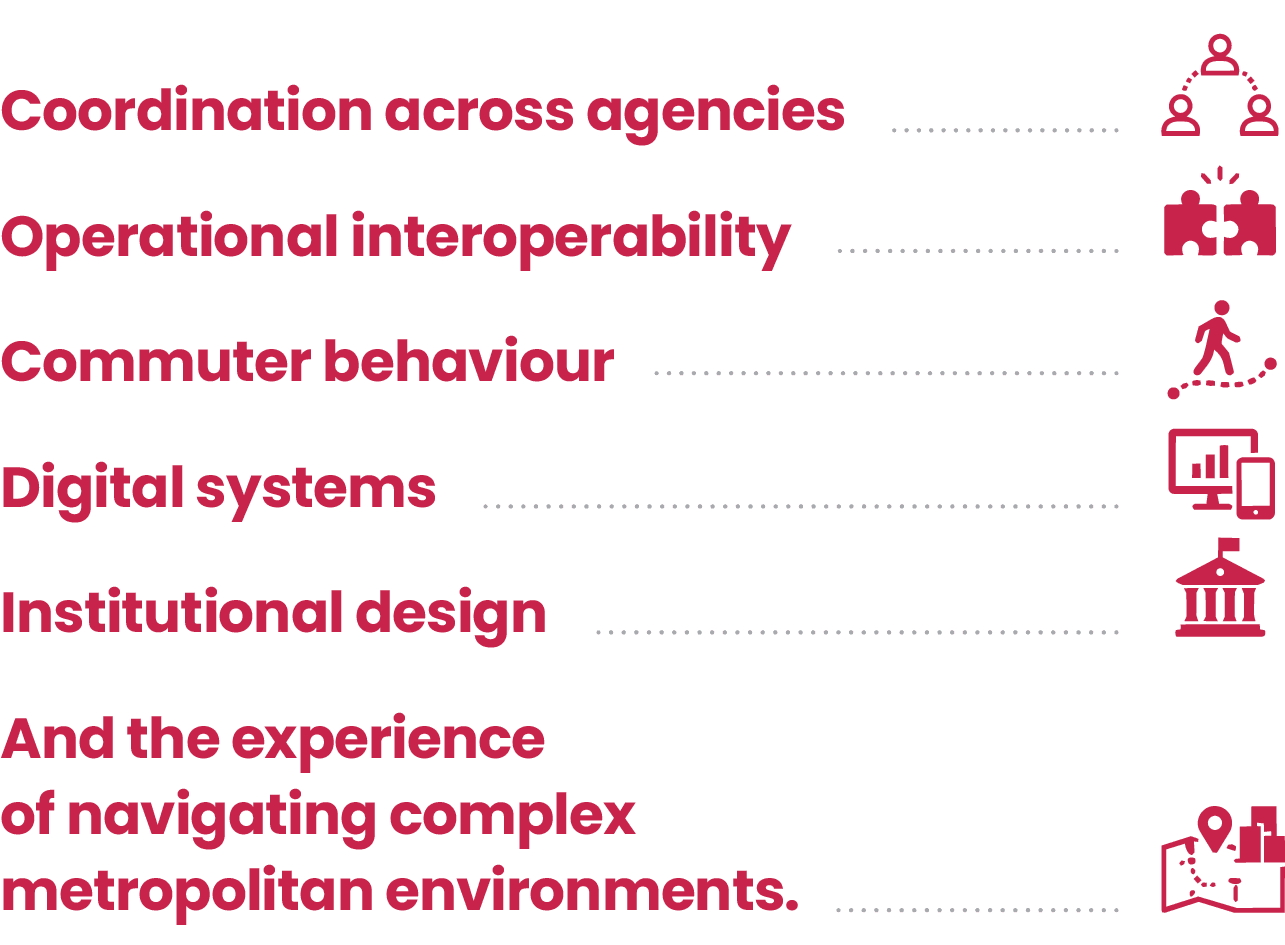
Over the coming months, Infra Katha and related TIF initiatives are expected to explore a wider set of practitioner conversations and exchanges around these themes.
Over time, Infra Katha is also expected to evolve as a more curated practitioner dialogue platform—bringing together operators, policymakers, technologists, urban practitioners and institutional leaders for facilitated conversations around mobility systems and metropolitan transitions.
While these conversations may remain relatively small and invitation-led in format, the broader intention is to document and share insights more openly over time through digital platforms and public recordings.
The intention is not to present ready-made models or imported “best practices”.
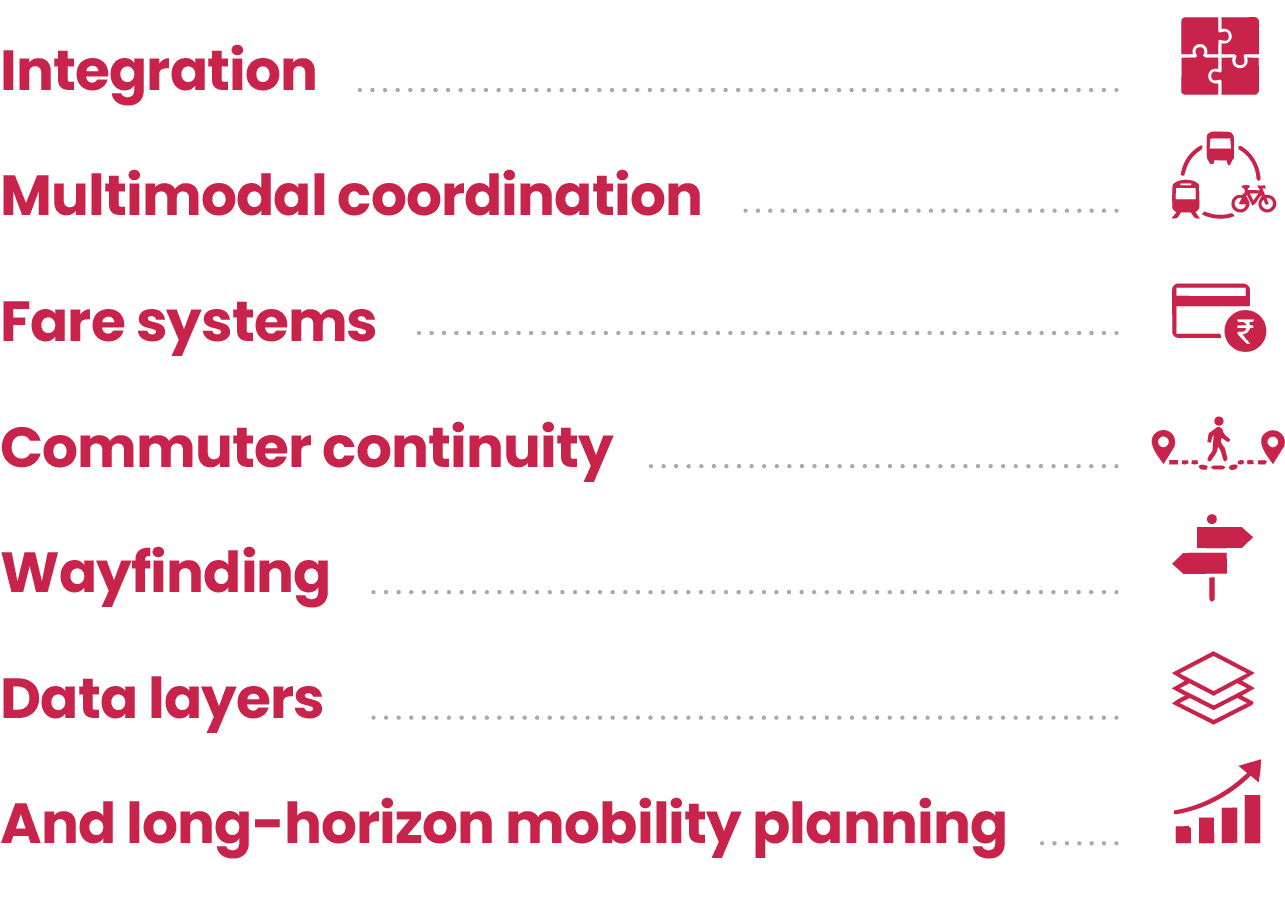
Instead, the objective is to better understand how different metropolitan systems are responding to questions around:
The upcoming conversation will feature Shashi Verma, Chief Technology Officer at Transport for London (TfL).
The relevance of such conversations lies not in replication, but in reflection.
As Indian metropolitan regions continue evolving, the challenge may increasingly be not only how to build mobility systems at scale—but how to make them function more coherently for commuters over time.
These questions may become even more relevant as India prepares for larger metropolitan transitions over the coming decade, including the proposed 2030 Commonwealth Games and the country’s broader 2036 Olympic ambitions. Around the world, such events have often acted as long-horizon stress tests for urban mobility systems and institutional coordination.
The Junction is intended to become one small part of that larger and continuing conversation.
Tensions Worth Watching
1. Infrastructure creation vs. commuter continuity
- Should walkability, lighting and station access be treated as core mobility infrastructure rather than secondary urban issues?
- As Indian metropolitan systems grow larger and more interconnected, what kinds of coordination mechanisms may become necessary across agencies and modes of transport?
- Can cities measure mobility success through commuter ease and journey continuity—not just through new infrastructure creation?
2. Agency mandates vs journey ownership
- When commuters switch between multiple transport systems, who is responsible for making the overall journey work smoothly?
- Why does the last mile often end up costing more than the main public transport journey itself?
3. Digital mobility ambition vs physical infrastructure gaps
- As transport systems become more digital, how important will telecom connectivity and real-time commuter information become?
These questions are intended less as conclusions and more as prompts for continued reflection and practitioner dialogue around the future of metropolitan mobility systems in India.
The Junction does not seek to offer definitive answers to these questions.
The intention is simply to create a calmer and more grounded space for observing, debating and learning from the evolving realities of metropolitan mobility systems.
The Infravision Foundation
A practitioner-led platform for better infrastructure conversations.
Enjoyed The Junction? Forward it to a friend who cares about India's cities — they can subscribe by clicking the button below
The Infravision Foundation is a non-profit platform for practitioner-led conversations around infrastructure and urban systems. It is not affiliated with any government agency or political party.