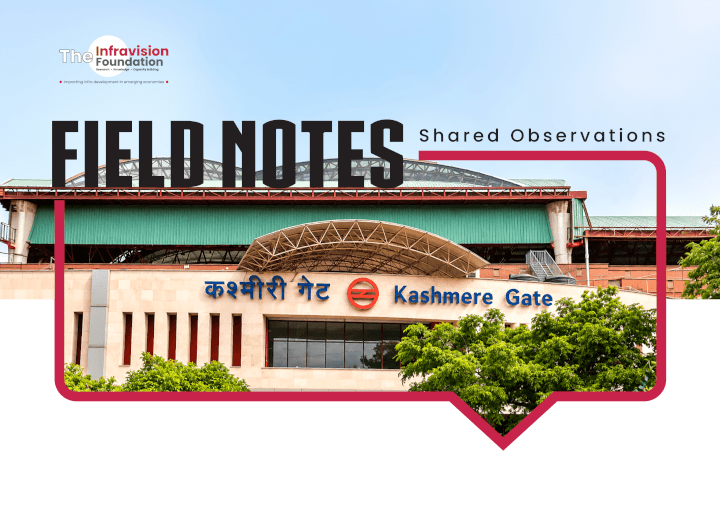
Field Notes 03 | Kashmere Gate
The Node That Does Everything Except Explain Itself
Three metro lines, a major interstate bus terminal and 2.57 lakh passenger movements a day. At one of Delhi's busiest interchanges, how easy is it to find your way?
The insight
A commuter arrives at Kashmere Gate to change from the Red Line to the Yellow Line. Another steps off an interstate bus, suitcase in hand, looking for the metro. A student leaves the station for a nearby university.
All three are using the same transport interchange. But each must find a different route through its platforms, corridors, exits and surrounding streets.
Kashmere Gate is an impressive feat of infrastructure. Three Delhi Metro lines converge across multiple levels, alongside one of northern India's busiest interstate bus terminals, Maharana Pratap Inter State Bus Terminus (ISBT). Yet bringing transport services together is only part of what makes an interchange work.
The other part is helping people navigate between them.
Colour-coded floor markings (representing red, yellow and violet lines) guide passengers towards metro lines. But these can be obscured by crowds. Announcements can be difficult to hear. First-time visitors may need to stop and ask for directions, sometimes turning to shopkeepers at station kiosks.
These observations, shared by Dr Meenakshi Panwar of the nearby Indira Gandhi Delhi Technical University for Women (IGDTUW), raise a wider question: does the information available to commuters help them navigate the entire interchange, or mainly find their way to individual platforms?
The distinction matters. Good wayfinding should make the next step in a journey clear, especially to someone unfamiliar with the station.
Why this matters
Kashmere Gate was Delhi Metro's second-busiest station in June 2026, recording an average daily passenger footfall of 2.57 lakh, according to DMRC figures reported by Hindustan Times.
Three metro lines converge here, alongside the Maharana Pratap ISBT, which was reported to handle approximately 2,600 buses daily in 2024. Few places in Delhi bring together such a concentration of transport services and connecting journeys.
At this scale, signage, wayfinding and the ease of transfers are not minor conveniences. They are central to how the interchange works.
For regular commuters, familiarity makes a complicated interchange easier to navigate. They know which corridor to take, where to change levels and which exit to use.
But first-time visitors, elderly passengers, people with disabilities and travellers carrying luggage may experience the same space very differently.
The quality of a transfer depends on more than the distance between two services. It also depends on clear directions, accessible routes, manageable pedestrian flows and reliable information about onward connections.
The real test is whether a commuter can move confidently from one part of the interchange to another, without unnecessary confusion, delay or discomfort.
The Snapshot | Kashmere Gate
The metro station
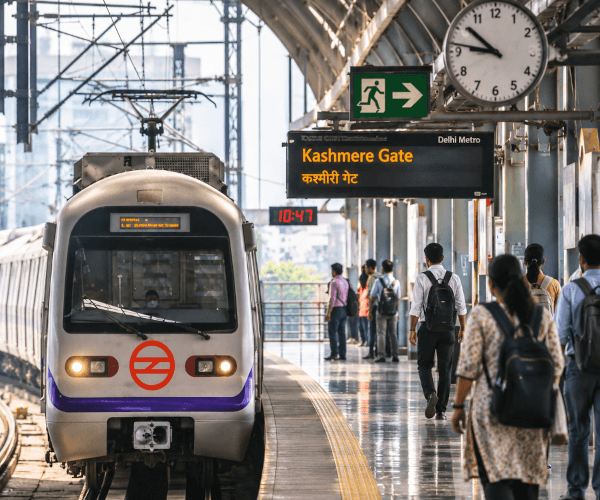
2.57 lakh: Average daily passenger footfall in June 2026; second-busiest station on the Delhi Metro network that month.
3 metro lines: Red (elevated), Yellow and Violet (underground).
6 platforms: Spread across multiple levels.
Approximately 11,000 sq m: Reported station floor area.
8 entry and exit gates: Gates 7 and 8 lead towards the ISBT.
47 escalators: supporting movement between levels.
The bus connection
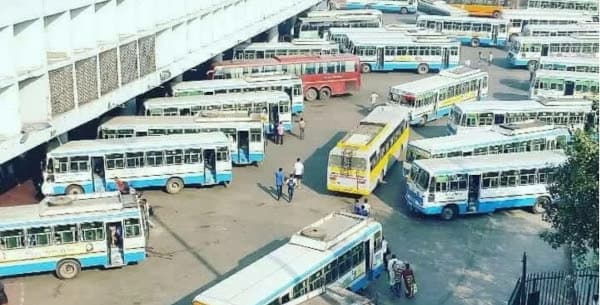
Approximately 2,600 buses daily: At the adjoining Maharana Pratap ISBT, based on figures reported in 2024.
60 bus bays: Serving interstate and local buses.
The surrounding destinations
IGDTUW and Ambedkar University Delhi are within walking distance.
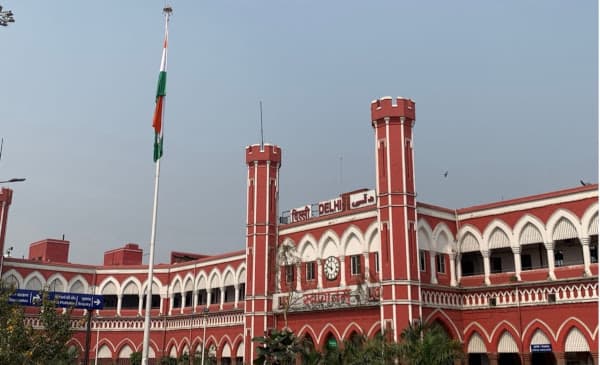
Delhi Junction (Old Delhi Railway Station) is approximately 1.5 km away.
The interchange also serves passengers heading towards Delhi University, Chandni Chowk and the Red Fort.
What works
Delhi Metro has built a large, interconnected rail network, and Kashmere Gate demonstrates what sustained investment in mass transit can achieve.
The station brings three lines together, allowing passengers to change routes without leaving the metro system. The addition of the Violet Line in 2017 created another interchange option, helping distribute passenger movements across the network.
The station also has extensive infrastructure for moving passengers between levels. Escalators, lifts and connecting corridors make transfers possible across a complex, multilevel layout.
The adjoining ISBT creates another important advantage. Passengers arriving from other states can connect to Delhi's metro network or move to Old Delhi Railway Station without travelling to a distant interchange.
This proximity matters. Bringing major transport services together reduces the need for separate journeys between terminals and creates the possibility of convenient, integrated travel.
But proximity is only the starting point. The next challenge is ensuring that passengers can use these connections easily.
What still needs attention
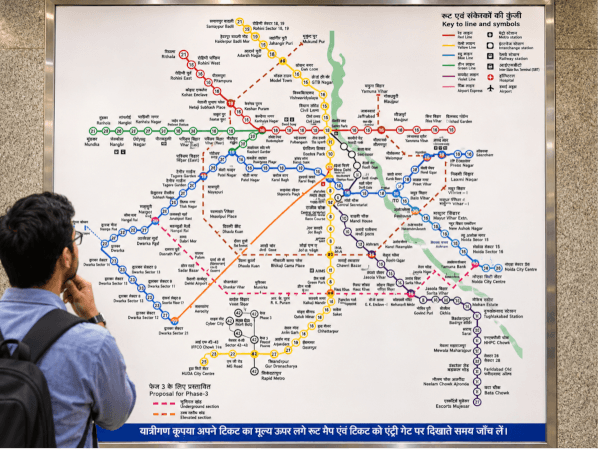
1. Finding the next connection
At a large interchange, wayfinding is not simply about displaying the name or colour of a metro line.
A passenger needs to know which direction to take, where to change levels, how to reach the correct platform and which exit leads to the next destination.
Kashmere Gate has colour-coded floor markings and passenger announcements. Yet, as Panwar observes, floor markings can disappear beneath crowds, while announcements may be difficult to hear in noisy corridors. Some passengers turn to nearby shopkeepers for help.
These accounts do not establish that signage is inadequate across the station. They do, however, highlight the importance of information that remains visible and understandable in crowded conditions.
The larger question is whether passengers receive clear, continuous guidance through the interchange, particularly at the points where they must make decisions.
2. Making transfers easier
The experience becomes more demanding when passengers carry luggage or have limited mobility.
Travellers arriving from the ISBT need to locate the appropriate metro entrance and navigate between levels. Panwar notes that the lift near the ISBT-side entrance is not immediately obvious to some passengers. She has seen people carrying large bags use stairs or escalators instead.
Passengers moving towards different lines and exits also cross one another's paths, adding to congestion in busy corridors.
Better wayfinding and passenger-flow management can work together: helping people identify their routes earlier and reducing unnecessary stops, reversals and conflicting movements.
3. Connecting the station to the street
The commuter's journey continues beyond the metro gates.
Between the metro and ISBT, pedestrians encounter vehicle movements around a parking area and walking spaces that can be constrained by vendors and other activities.
For someone pulling a suitcase, these conditions can make a short connection more difficult than the distance suggests.
Students walking to nearby campuses face another set of concerns. Panwar describes uncomfortable conditions along the route to IGDTUW, particularly for women travelling after dark.
These are reminders that the quality of an interchange cannot be assessed solely within the station building.
4. Making different systems work together
The responsibilities for these journeys are divided.
Delhi Metro Rail Corporation manages the metro station. Delhi Transport Infrastructure Development Corporation operates the ISBT. Bus operators, road authorities, civic agencies and traffic police manage other parts of the surrounding transport environment.
Yet passengers experience these spaces as parts of one journey.
Dr Laghu Parashar, Senior Transport Specialist at the World Bank, argues that a good interchange requires more than physical proximity. Connecting facilities should be accessible, safe and comfortable. Services should also be operationally coordinated, with information on expected arrivals helping passengers minimise waiting and the inconvenience of transfers.
That raises a practical question at Kashmere Gate: who looks at the complete journey from a metro platform to a bus bay, or from a station exit to the surrounding street?
The question will become more relevant if the proposed Delhi–Panipat–Karnal regional rapid rail connection and other redevelopment plans proceed. Additional infrastructure could create new connections, but also make the interchange more complicated unless passenger movement is planned across the different facilities.
The takeaway
Kashmere Gate shows how much India's urban transport networks have achieved in connecting places and services.
The next test is how easily people can navigate those connections.
Clear wayfinding, accessible transfers, comfortable walking routes and coordinated passenger information can turn a collection of transport facilities into an interchange that works as a whole.
For commuters, the best interchange is not necessarily the one with the most connections. It is the one that makes those connections easiest to use.
The Infravision Foundation
A practitioner-led platform for better infrastructure conversations.
Enjoyed Field Notes and The Junction? Forward it to a friend who cares about India's cities — they can subscribe by clicking the button below
The Infravision Foundation is a non-profit platform for practitioner-led conversations around infrastructure and urban systems. It is not affiliated with any government agency or political party.