Harit Setu—Making room for walking, and keeping the work going
In Nigdi–Pradhikaran, Pimpri-Chinchwad is building connected walking and cycling routes—and sustaining the effort across successive municipal commissioners.
The insight
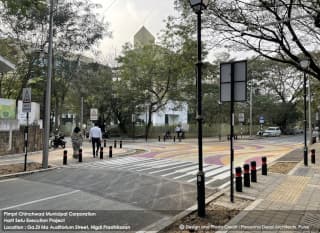
A shaded footpath. A cycle lane alongside it. Places to sit beneath trees. A route to school, the shops or a neighbourhood garden without repeatedly stepping into traffic.
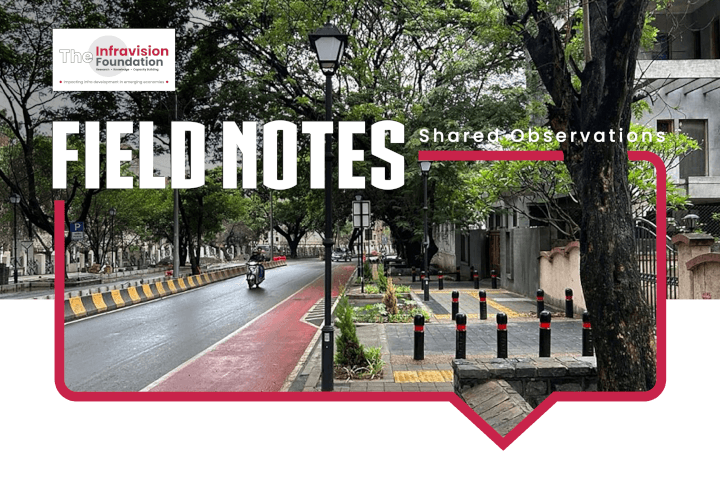
The photographs from Pimpri-Chinchwad show the experience that Harit Setu—“green connectivity”—seeks to create: a network of neighbourhoods that can be covered in 15 minutes on foot or by bicycle. Earlier street improvements focused on individual corridors. Harit Setu connects homes with everyday destinations and public transport through continuous walking and cycling routes, making short journeys easier without a motor vehicle.
In a conversation with TIF, Shravan Hardikar, former Municipal Commissioner of Pimpri-Chinchwad (2017–2021) and now Managing Director of Maha Metro, described a simple test: a parent pushing a pram or a person using a wheelchair should be able to travel without obstruction.
Why this matters
Walking connects homes to schools, shops, parks and public transport. When that walk becomes difficult, even a short errand can turn into a two-wheeler or autorickshaw trip.
Improving it involves choices about street space. Wider footpaths and cycling routes can change parking arrangements and provoke opposition.
It also requires sustained effort. Municipal commissioners move on; the work needs to continue.
The urgency now has judicial backing. In June 2026, the Supreme Court affirmed the fundamental right to walk on demarcated footpaths and authorities' duty to maintain them—a ruling now prompting fresh government directions to keep pavements accessible and free of obstructions.
The plan at a glance
What changes
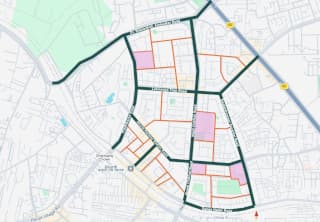
Connected routes
Link neighbourhood destinations through continuous walking and cycling routes.
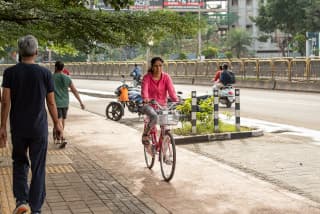
Street design
Give pedestrians, cyclists and vehicles designated space, with crossings, lighting, shade and seating.
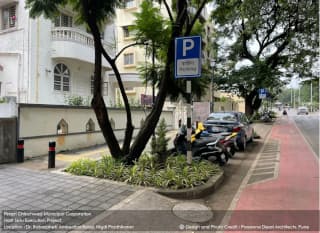
Parking and utilities
Organise parking and coordinate underground services with the redesigned street.

Gradual rollout
Test layouts, gather feedback and use model streets to inform wider implementation.
Coverage
Around 100 km of streets improved across Harit Setu and PCMC's wider streetscape programme, according to the project team. The longer-term vision is to extend the Harit Setu neighbourhood network to around 200 km.
What works
The city's wider street programme included trials before permanent designs were settled.
At Linear Garden Street, an early model for the transformation, teams tested layouts and junctions on the ground. On-site demonstrations checked details such as ramp slopes. Discussions with residents, shopkeepers and municipal departments helped refine the design during planning and construction.
This made the proposed changes tangible and gave engineers a chance to identify practical problems. Harit Setu subsequently took the ambition towards a connected neighbourhood network, beginning with a pilot in Pradhikaran.
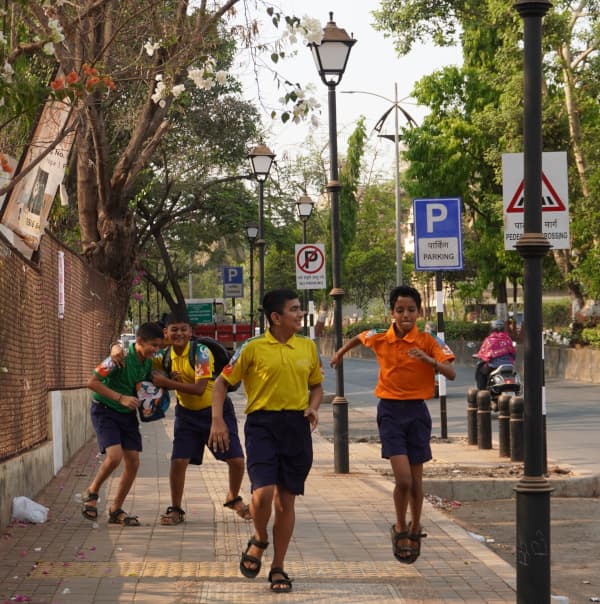
ITDP reports residents using the redesigned streets for morning and evening walks, grandparents walking with grandchildren, and children having more space to walk and cycle to school.
PCMC's walking and cycling work won national recognition through India Cycles4Change in 2021 and Streets4People in 2022, both linked to its Harit Setu plans. In 2023, it became one of ten cities selected for the Bloomberg Initiative for Cycling Infrastructure, bringing funding and technical support for its neighbourhood approach.
Nigdi–Pradhikaran is the pilot neighbourhood for Harit Setu's wider city plan. Construction prototypes helped engineers, supervisors and masons translate designs into practice. A vehicle-free street event also let residents experience a different use of the space. Bapu Gaikwad, who heads PCMC's Urban Mobility Department, says the response prompted requests to extend the one-day event and bring it back.
What carried it forward
Hardikar places the continuity within a wider City Transformation Strategy.
Developed through a participatory process, it required months of discussion with corporators and political leaders. He describes securing a resolution that future investment should advance the agreed direction, rather than pull the city away from it.
The strategy gave successive commissioners a shared foundation to build on.
When Hardikar returned on additional charge in 2025–2026, he encountered renewed objections. In his account, he encouraged corporators to examine their electoral support alongside the complaints they were hearing: less-vocal residents could express their views through their votes.
It raises a question for other cities: whose experience is being heard when street changes are debated?
Continuity also rests on PCMC's team. Nearly two decades ago, the corporation sponsored Gaikwad's postgraduate training in public transportation. Experienced staff, sustained technical partnerships and a dedicated Urban Mobility Department have helped successive commissioners carry the work forward.
What still needs attention
Residents have raised concerns about parking, waterlogging and encroachments. The project team acknowledges that neighbourhood parking and vendor management needed greater attention before construction. Gaikwad says additional stormwater drains have considerably reduced waterlogging. Keeping the new footpaths clear remains an ongoing challenge, requiring coordination between municipal departments and traffic police.
The takeaway
Harit Setu illustrates how better walking infrastructure can become a continuing municipal commitment: test changes on the ground, build agreement on the direction, and connect that agreement to investment decisions.
The lasting test is the everyday journey—whether people can walk safely and comfortably, and whether those improvements endure.
The Footpath Mayor
In Bengaluru, walking-tour leader Arun Pai has appointed himself the “Footpath Mayor”. His approach: measure the obstacles pedestrians face and ask the city to remove them.
After running and rating 100 km of footpaths, he took his findings to the civic commissioner. A subsequent 10 km footpath run turned participants into auditors: they counted an average of five obstacles each. The civic body promised to bring that to zero.
Through Project Walkaluru, volunteers are documenting footpaths on video. Pai's demand is memorable: if cars get signal-free corridors, pedestrians deserve OFF—obstacle-free footpaths.
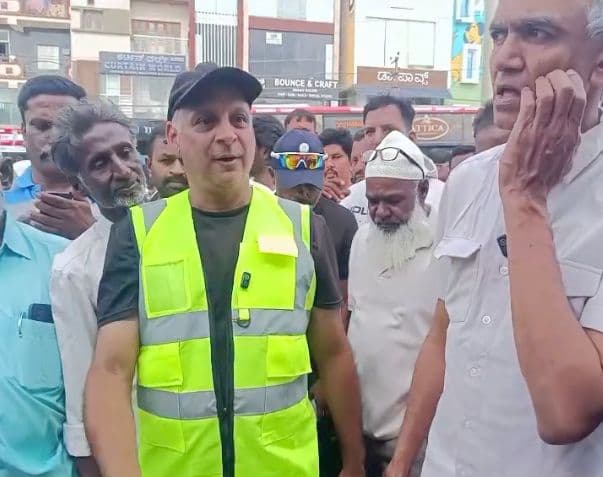
Arun Pai (left), with Karnataka minister Krishna Byre Gowda, to mark the removal of 100 garbage black spots in under 45 days, an initiative by Bangalore North City Corporation, to make pathways walkable.
The Infravision Foundation
A practitioner-led platform for better infrastructure conversations.
Enjoyed Field Notes and The Junction? Forward it to a friend who cares about India's cities — they can subscribe by clicking the button below
The Infravision Foundation is a non-profit platform for practitioner-led conversations around infrastructure and urban systems. It is not affiliated with any government agency or political party.